ServicesWisdom Teeth Removal
Wisdom Teeth Removal in Hebron
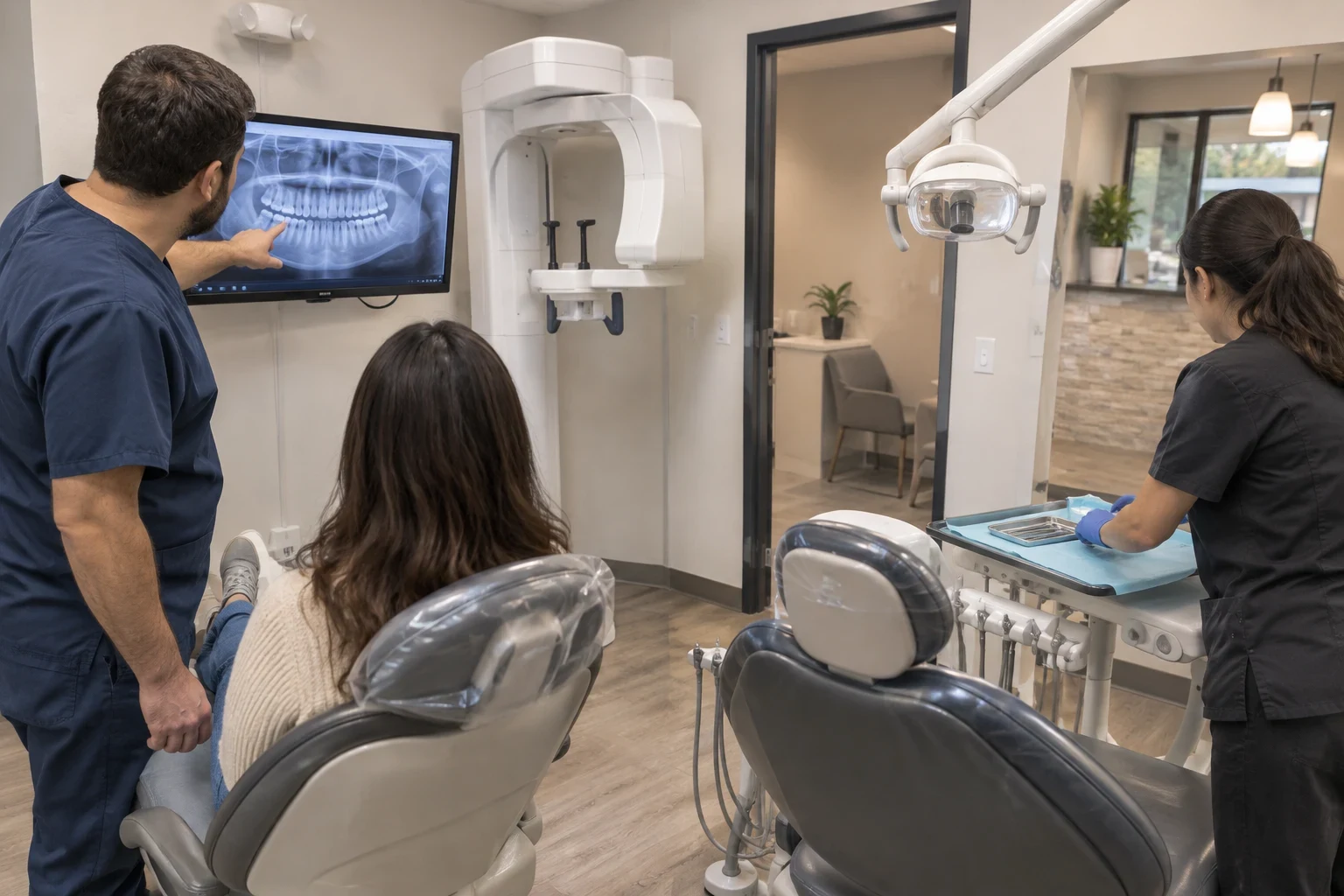
Some wisdom teeth can stay right where they are. We look at yours with careful imaging first, give you a straight answer on whether removal is worth it, and plan a gentle, comfortable procedure. One person handles your care from the first conversation through your follow-up check.
When Wisdom Teeth Should Come Out, and When They Can Stay
Third molars show up last, most often somewhere between age 17 and the mid-twenties. Plenty erupt straight, stay easy to clean and never cause a problem. Others stall beneath the gum or lean into the molar ahead of them, collect food and gradually harm healthy teeth. Your images decide the answer, not a blanket rule that everyone should lose all four.
The judgment behind that answer rests on over 10 years of experience in general and implant dentistry. It shapes how we remove a wisdom tooth, too: protecting the second molar and the bone around it keeps future options open, dental implants included.
Starting with your first phone call, a single person answers your questions, books the evaluation, walks you through the plan and checks on you after the procedure. You never have to piece the story together from the front desk, billing and the clinical side.
What Your Wisdom Tooth Care Includes
- Focused evaluation and imaging
- Digital X-rays reveal crowns, roots and the bone around them. If a root lies near the nerve canal or the sinus, a CBCT scan gives us a 3D picture before we suggest a course of action.
- A written treatment plan
- We spell out which teeth should come out, which are fine to keep, and the reasoning behind each call. Every step is itemized, so you see the full cost before booking.
- Gentle extraction under local anesthetic
- The area is numbed thoroughly and tested before we begin. Impacted teeth are usually split into smaller pieces, which lets them come out with less pressure on the surrounding bone.
- Socket care and sutures
- Each site is rinsed clean, dissolving stitches go in where they will help, and you head out with gauze and printed aftercare steps.
- Follow-up and a direct contact
- Your coordinator reaches out during the first few days of healing and is the one number to use if something does not feel right.
Signs Your Wisdom Teeth Need Attention
Pressure or ache at the back of the jaw
A steady soreness behind your final molar, at times reaching up toward your ear, usually points to a tooth pressing on bone or on the tooth beside it.
A swollen, tender gum flap
A partly surfaced tooth can leave a flap of gum that holds bacteria and becomes irritated. These flare-ups tend to come back until the tooth is dealt with.
Food packing and bad taste
A gap behind the second molar catches food your toothbrush cannot reach. A sour taste or stubborn bad breath from that area is often the first hint.
Decay on the tooth in front
A tilted wisdom tooth can conceal a cavity forming on the back of your second molar. Taking the wisdom tooth out in time can protect the molar that does your chewing.
Findings on an X-ray
Some problems cause no symptoms, yet images reveal a cyst, bone loss or a damaged root. Those are worth addressing before pain begins. Swelling that spreads, a fever or difficulty swallowing calls for medical care right away.
What Shapes the Cost of Wisdom Teeth Removal
Two patients can both need wisdom teeth out and face very different visits, so we price from your own images instead of a set figure. Every line of the plan is written out before you agree to anything. If you carry PPO coverage, there is a good chance we accept it, since the practice is in-network with 15+ major PPO dental insurance plans. Patients without coverage can look at our in-house Membership Plan for uninsured patients.
Erupted or impacted
A tooth that has fully come through the gum usually comes out much like a routine extraction. One still buried in gum or bone needs more chair time and is removed in sections.
How many teeth
Many patients have two or four removed at one appointment. Doing them together often means you heal once instead of twice.
Imaging needs
Standard digital X-rays answer most questions. When roots sit near the nerve or sinus, the 3D CBCT scan is covered as part of the $25 focused evaluation.
How you pay
PPO benefits and the Membership Plan both lower what comes out of pocket. We also offer 0% interest financing for up to 24 months, which spreads the balance into monthly amounts. Checking for preapproval has no impact on your credit score.
How Wisdom Teeth Removal Works With Us
- 1
Your phone call
Let us know what you are noticing and how long it has been going on. We set up your evaluation and tell you what to have ready, such as your insurance card if you carry one.
- 2
Evaluation and plan
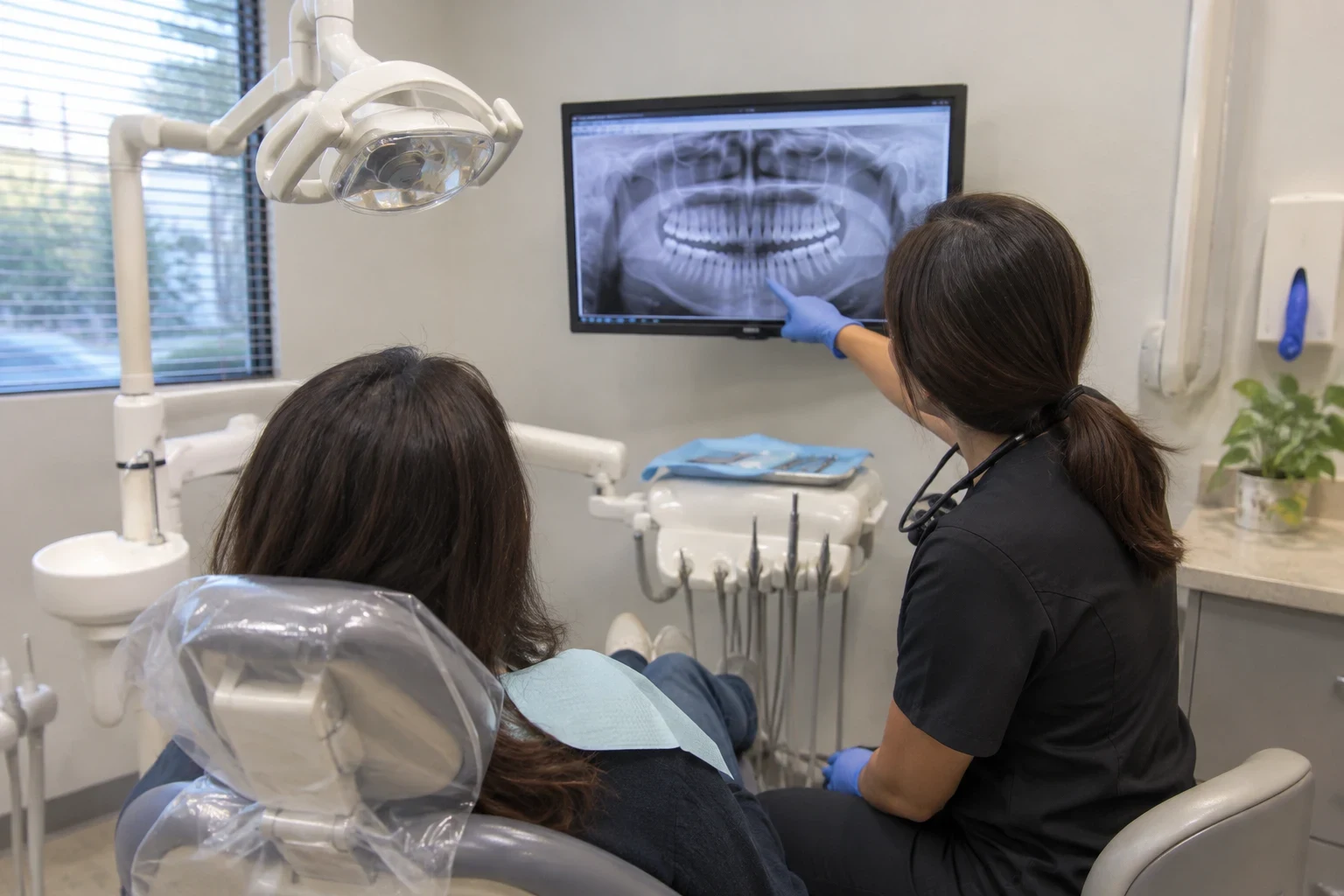
We examine the back of your mouth, capture digital X-rays, add a 3D CBCT image when the roots call for it, and go over the pictures with you on screen. You head out knowing our recommendation and exactly what it involves.
- 3
The removal visit
Once you are completely numb, we take out the planned teeth, dividing any impacted ones into sections. Most appointments last well under an hour or two, and you should feel pressure rather than anything sharp.
- 4
Recovery at your pace
Plan on some swelling for two or three days. Ice, soft meals and skipping straws protect the healing sockets, and your coordinator calls to see how things are going.
Wisdom Teeth Removal Questions
Do all four wisdom teeth have to come out?
Not necessarily. A wisdom tooth that stands upright, has fully surfaced and can be brushed well often stays put. We suggest removal only for teeth already causing trouble or clearly headed that way, and we show you the images that support it.
Will I be awake, and will it hurt?
Yes, you stay awake, and a local anesthetic numbs the area completely. We confirm it is working before starting and stop whenever you raise a hand. Patients usually report firm pressure and a few noises, not pain.
How long does recovery take?
Most patients are back at work or class after a few days. Swelling tends to be greatest on day two and fades from there. The bone keeps filling in for weeks afterward, but you will barely notice it.
What is dry socket, and how can I prevent it?
It is a painful condition where the clot protecting the empty socket breaks loose before healing gets going, leaving bone uncovered. Avoiding straws, cigarettes and forceful rinsing for the first several days makes it far less likely. If soreness starts climbing again after the third day, tell your coordinator and we will bring you in.
Should I wait until it hurts?
If your images show a healthy tooth in a good position, waiting is a sensible choice. If it is impacted or already wearing on the molar beside it, taking it out sooner is usually simpler and heals faster, particularly in younger adults.
Find Out What Your Wisdom Teeth Need
For $25, the focused evaluation covers a full exam, digital images, 3D scanning when your case calls for it and a written plan you can take home. The same person who books that visit stays with you until you have healed.