ServicesDental Implants
Dental Implants in Hebron
Dental implants give you a fixed tooth anchored in bone, one that chews and feels much like the tooth you lost. We plan each implant from a 3D scan, and a single coordinator keeps your treatment plan, appointments and insurance questions together from first exam to final crown.
A replacement tooth that stays put
An implant is a small titanium post set into the jawbone in place of a lost root. Over the next few months, bone fuses tightly to its surface, and the post becomes a firm anchor for a custom crown, a bridge or a denture. It does not sit on the gums the way a removable partial does, and it never borrows support from the teeth beside it.
Implants tend to make sense when a tooth is already gone, when a cracked or heavily decayed tooth is past saving, or when a loose denture turns every meal into work. An open gap allows the bone beneath it to shrink and the teeth around it to drift, so planning earlier usually means simpler treatment.
Over 10 years of experience in general and implant dentistry stands behind each plan we write. One person answers your questions, books every stage and explains the costs, so you never have to start your story over with someone new.
What your implant treatment includes
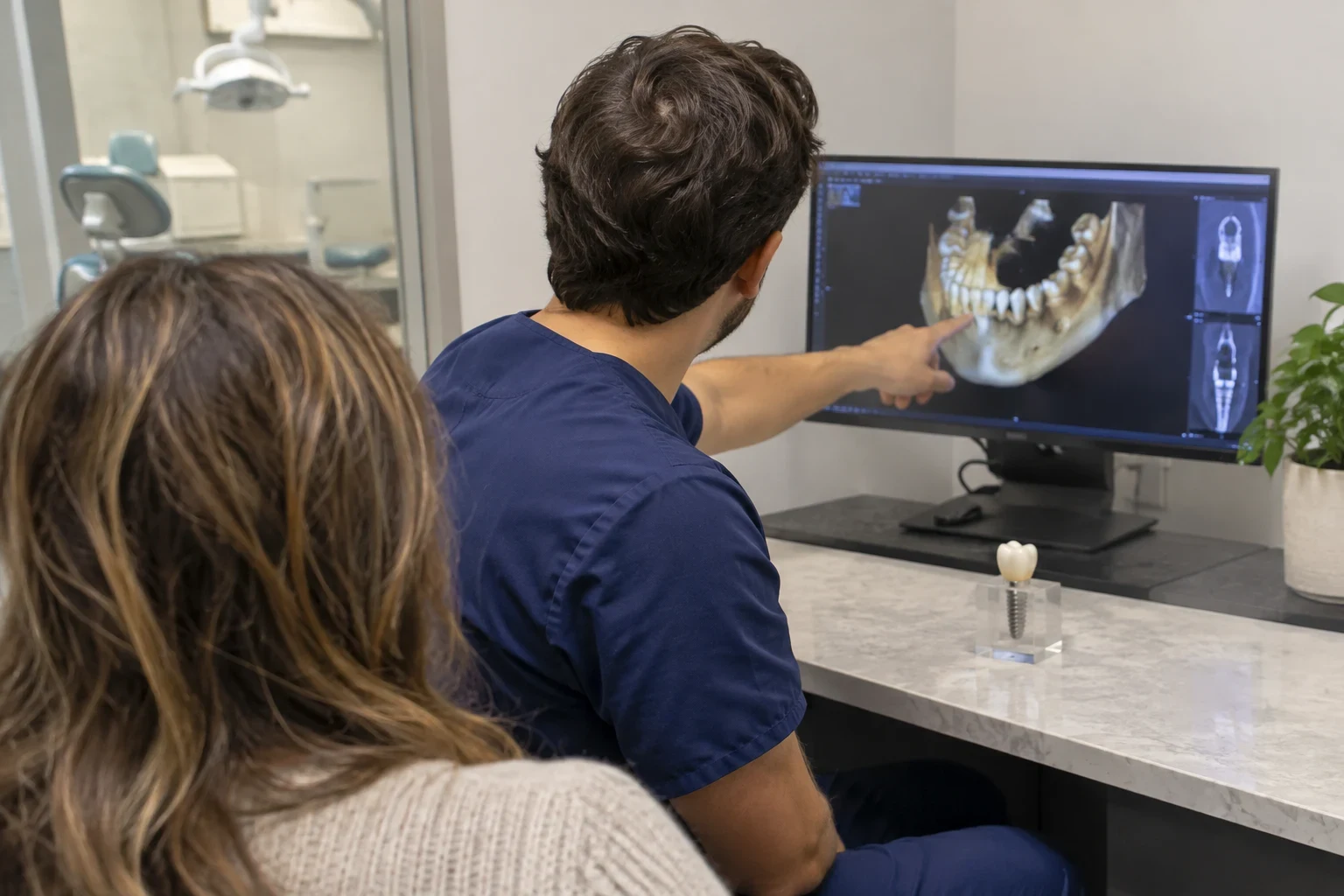
- Focused evaluation and CBCT scan
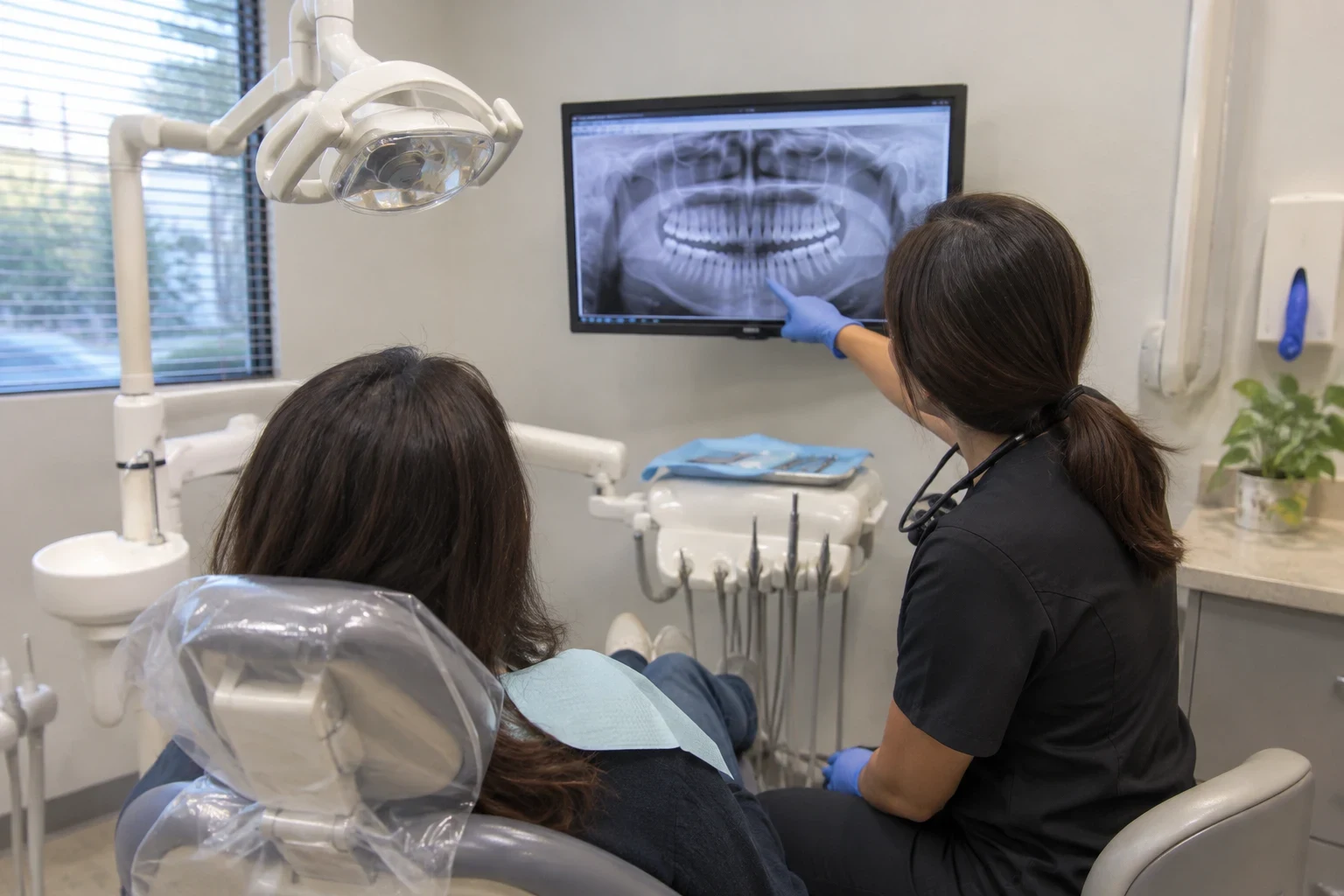
- The first visit pairs a comprehensive exam with digital X-rays, and a CBCT scan when your case needs one. That 3D image maps bone height and width, along with nerves and sinuses, before any placement is planned.
- A written treatment plan
- Your plan lays out each stage, what happens during it and what it costs. If saving the tooth, a bridge or a denture would serve you better, you will hear that from us.
- Implant placement
- We set the titanium post in one visit with the area numbed by local anesthetic. Most patients feel pressure rather than pain, and we pause to ask how you are doing as we go.
- Grafting if the bone is thin
- A tooth that has been missing for some time often leaves the bone too narrow. A graft builds the site back up so the implant has solid support.
- Abutment and custom crown
- Once the implant has fully healed into the bone, we fit a small connector called an abutment and a crown matched in shade and shape to the neighboring teeth. Our crowns and bridges come with a 5-year warranty.
- Follow-up visits
- Once the crown is in, we recheck your bite, the gum tissue around the implant and how you clean it, so minor problems are found early.
When an implant makes sense
An open space where a tooth was
Losing even a single back tooth changes the way you chew, and nearby teeth can slowly lean into the gap.
A tooth past saving
A fractured root or decay that reaches below the gumline can mean the tooth has to come out. In many cases we plan the implant alongside the extraction so the site is prepared.
A denture that slips or rubs
Two or more implants can lock a denture in place, making firmer foods much more comfortable to bite into.
An aging bridge with trouble underneath
When decay reaches the teeth holding up an older bridge, implants can carry the span without depending on those teeth again.
A shift in your bite or facial shape
Without tooth roots to keep it active, jawbone slowly recedes, and the lower face can start to look hollow. An implant keeps that bone working.
How the process runs, stage by stage
- 1
Evaluation and planning
Your first visit covers the exam, imaging and a candid conversation about options. You leave with a treatment plan and a named coordinator who handles scheduling and insurance from there.
- 2
Placement day
We numb the area, place the post and close the gums. Expect some swelling for a few days, and you will go home with written aftercare and a number to reach your coordinator.
- 3
Healing in
The bone typically bonds to the implant over several months. You can wear a temporary tooth in visible areas while that happens, and we see you to confirm healing.
- 4
Final crown
We take precise impressions, fit the abutment and seat your custom crown. Then we fine-tune the bite until it feels natural when you close.
What shapes the cost of an implant
No two mouths need the same work, so we price from your scan instead of a fixed menu. Your written plan lists every stage and its cost before you agree to anything. Our office is in-network with 15+ major PPO dental insurance plans, and uninsured patients can join our in-house Membership Plan. We also offer 0% interest financing for up to 24 months, and the preapproval check leaves your credit score untouched.
- How many teeth you are replacing
- One implant with one crown is a far smaller plan than several implants carrying a bridge or a full denture.
- The bone and gums at the site
- When the bone is too thin to hold a post securely, a graft or sinus lift becomes an added stage.
- Whether a tooth comes out first
- A damaged tooth still in place has to be removed and the socket prepared, and that work is folded into your plan.
- The restoration on top
- The design and material of the crown, bridge or implant-supported denture change the final figure.
- What your PPO plan covers
- Insurance plans differ in how they handle implants. Your coordinator looks up your benefits and tells you plainly what remains for you to pay.
Common questions about dental implants
Something not covered here? (972) 770-2607
Will the implant procedure be painful?
Before placement, local anesthetic numbs the area completely, and most patients describe the feeling as pressure rather than pain. Mild soreness and swelling for a few days afterward is normal, and over-the-counter medication usually keeps it in check. You go home with written aftercare, and we check in while you heal.
How long does the whole process take?
Expect several months between placement and the final crown, since bone needs that time to fuse with the implant. A graft or an extraction beforehand can lengthen the timeline. Your treatment plan spells out the expected schedule for your own case.
Am I too old, or do I have too little bone?
Age by itself seldom rules anyone out; general health and bone volume matter far more. Your CBCT scan measures the bone precisely, and grafting can often restore what has been lost. If implants turn out not to suit you, we will walk through dentures or a bridge as alternatives.
Will my dental insurance cover implants?
Coverage varies from one policy to the next. Our office is in-network with 15+ major PPO dental insurance plans, and your coordinator verifies your benefits before any treatment begins. Without insurance, our in-house Membership Plan and 0% interest financing make the cost easier to manage.
How do I care for an implant?
Clean it the way you would a natural tooth, brushing and flossing daily and keeping regular cleaning visits. The implant itself cannot get cavities, yet the surrounding gum tissue can become inflamed if plaque is left behind. We will show you which brushes and floss make the job simple.
Find out if implants fit your smile
Your first step is a $25 focused evaluation. It covers a full exam and digital X-rays, adds 3D CBCT imaging if your case needs it, and ends with treatment planning and a consultation. Patients visit us from Hebron, Lewisville, Carrollton and the surrounding area.