ServicesRoot Canals
Root Canals in Hebron, TX
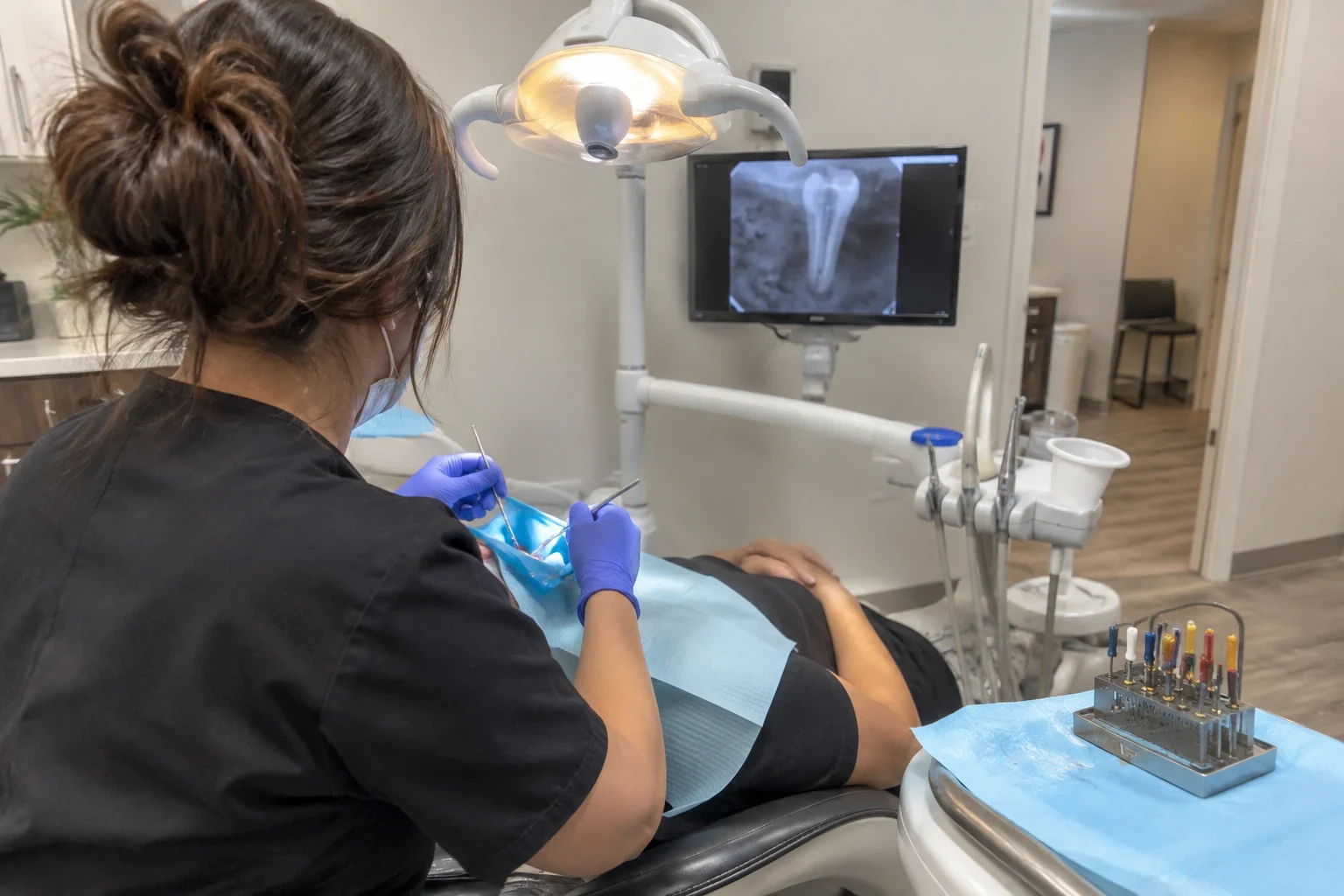
When the soft core of a tooth becomes infected, a root canal clears it out and seals the canals so your own tooth stays in place. One person on our team answers your questions and books each visit, from the first X-ray to the final crown.
When saving the tooth makes sense
Beneath the enamel and dentin, each tooth holds a living center of nerves and blood vessels known as the pulp. Deep decay, a crack or an old filling that has started to leak can let bacteria in, and once the pulp is inflamed it will not recover by itself. Removing that tissue and sealing the canals ends the infection, while the tooth, its root and its spot in your bite stay put.
Not every sore tooth needs this treatment. Some are fixed with a simple filling, and some are cracked too badly to keep. In that case we talk plainly about an extraction and whether dental implants are worth considering later. Because our practice has over 10 years of experience in general and implant dentistry, we can weigh saving the tooth against replacing it without leaning toward one answer.
Once you call, a single coordinator holds your file, schedules your visits and explains your coverage. You tell your story once, and the same person follows it through.
What your root canal treatment includes
- Imaging that shows the whole root
- Digital X-rays show where the decay has reached. When the case calls for it, a CBCT scan maps curved or extra canals that flat images can miss, so nothing is left behind.
- Careful, thorough numbing
- We numb the tooth and the surrounding gum fully and check before we begin. The goal is for treatment to feel much like a longer filling.
- Cleaning and shaping the canals
- Fine instruments remove the damaged pulp, and disinfecting rinses clean each canal down to its tip.
- A sealed, filled tooth
- The canals are filled with gutta-percha, a rubber-like material that seals against reinfection. The opening then gets a temporary or permanent filling until the tooth is restored.
- A crown to protect it
- Back teeth that have had a root canal can turn brittle and crack under chewing force. A porcelain or zirconia crown restores their strength, and our crowns and bridges carry a 5-year warranty.
Signs a tooth may need a root canal
Sensitivity that lingers
A quick twinge from ice water is common. When the ache stays for thirty seconds or longer after the hot or cold is gone, the pulp is likely in trouble.
An ache that wakes you
A throb that shows up on its own, with nothing hot, cold or sweet to set it off, is a warning sign. If it flares at night once your head is on the pillow, swollen tissue inside the tooth is often the cause.
A bump or swelling on the gum
A small pimple near the tooth that drains, or a bad taste that keeps coming back, can point to an abscess at the root tip. If swelling reaches your face or you have a fever, tell us right away when you call.
Pain when you bite down
Soreness when you chew or tap on one tooth can come from infection around the root or a crack that reaches the pulp.
A tooth turning darker
A tooth that gradually turns gray or brown after an injury may have lost its living tissue inside, and the absence of pain does not mean it is healthy.
How treatment works, start to finish
- 1
Evaluation and a written plan
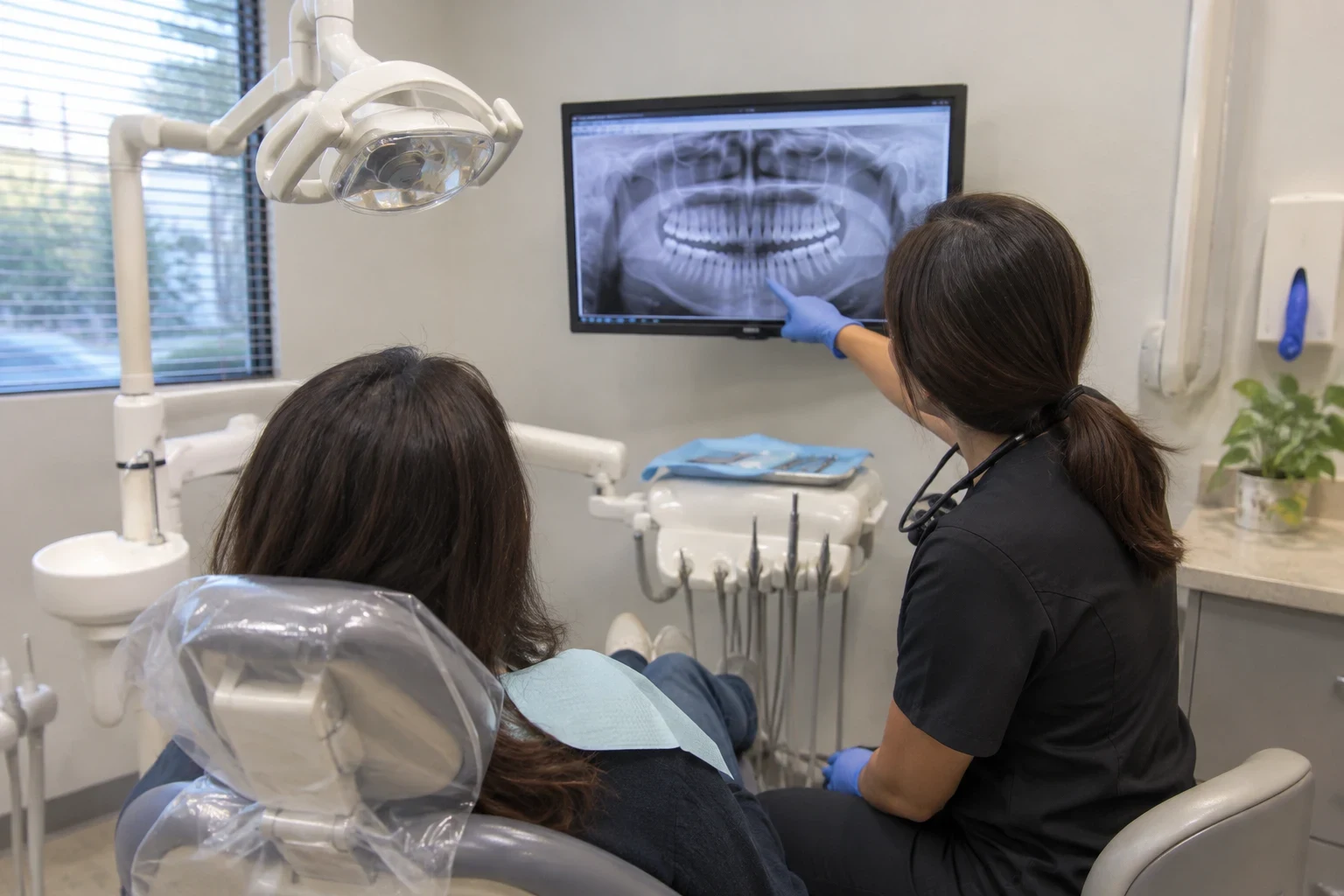
First we look closely at the tooth and capture digital X-rays, with a CBCT scan when more detail is needed. You go home with a treatment plan that spells out every step and its cost, the crown included.
- 2
Numbing and isolation
Once the area is fully numb, we place a dental dam, a thin rubber sheet that keeps the tooth dry and clean and keeps rinses out of your mouth.
- 3
The treatment visit
Most root canals are done in a single appointment lasting an hour or longer. A tooth with a heavy infection may take two visits, with medicine left inside between them. You can drive yourself and are usually back at work that day.
- 4
Crown and follow-up
Your coordinator books the crown appointment, where we scan the tooth and place a crown shaded to blend with your smile. A few days of mild tenderness is normal and usually eases with over-the-counter pain relievers.
What moves the cost of a root canal
Two things shape the price most: which tooth needs care and how it will be restored afterward. Before any work starts, you see the complete treatment plan with the crown listed. Your coordinator explains what your insurance is expected to cover, so you know your share before the first appointment.
- Front tooth or molar
- Most front teeth have a single canal. A molar often has three or four, and each one adds time and careful work.
- Complexity or retreatment
- Narrow, curved or calcified canals take longer to clean and shape. Redoing an older root canal that has failed is also more involved than treating a tooth for the first time.
- The final restoration
- The total changes with what the tooth needs on top: a buildup, a post, a crown, and which crown material you choose.
- Insurance and payment options
- We are in-network with 15+ major PPO dental insurance plans. Patients without coverage can join our In-house Membership Plan. We also offer 0% interest financing for up to 24 months, and checking for preapproval leaves your credit score untouched.
Root canal questions patients ask
Something not covered here? (972) 770-2607
Does a root canal hurt?
The pain people dread usually comes from the infection, not the treatment. With the tooth fully numb, most of the visit feels like pressure and vibration. Some tenderness for a few days afterward is normal.
Should I just pull the tooth and get an implant instead?
Keeping a healthy root is usually the better choice when the tooth can be saved, because nothing replaces your own tooth exactly. If a crack runs below the gum or too little tooth remains, an extraction followed by an implant can be the stronger long-term answer. We show you the X-rays and explain which way we lean and why.
How long will the tooth last after a root canal?
A well-sealed tooth with a good crown can last for many years, often a lifetime. The biggest risks are a delayed crown and new decay at the edges, so regular checkups matter.
Do I need a crown after every root canal?
Not always. Front teeth that take little biting force can sometimes be restored with a filling. Premolars and molars almost always need a crown to keep them from fracturing.
What should I do while I wait for my appointment?
Chew on the other side, avoid very hot or cold foods and take an over-the-counter pain reliever as directed on the label. Do not place aspirin on the gum. If swelling grows, tell your coordinator so we can see you sooner.
Find out if your tooth can be saved
Our $25 focused evaluation starts with a comprehensive exam and digital X-rays, includes a CBCT scan if needed, and finishes with treatment planning and a consultation. One coordinator then sets up each visit for patients from Hebron, Lewisville, Carrollton and the surrounding area.